
Currently Empty: $0.00
Research only

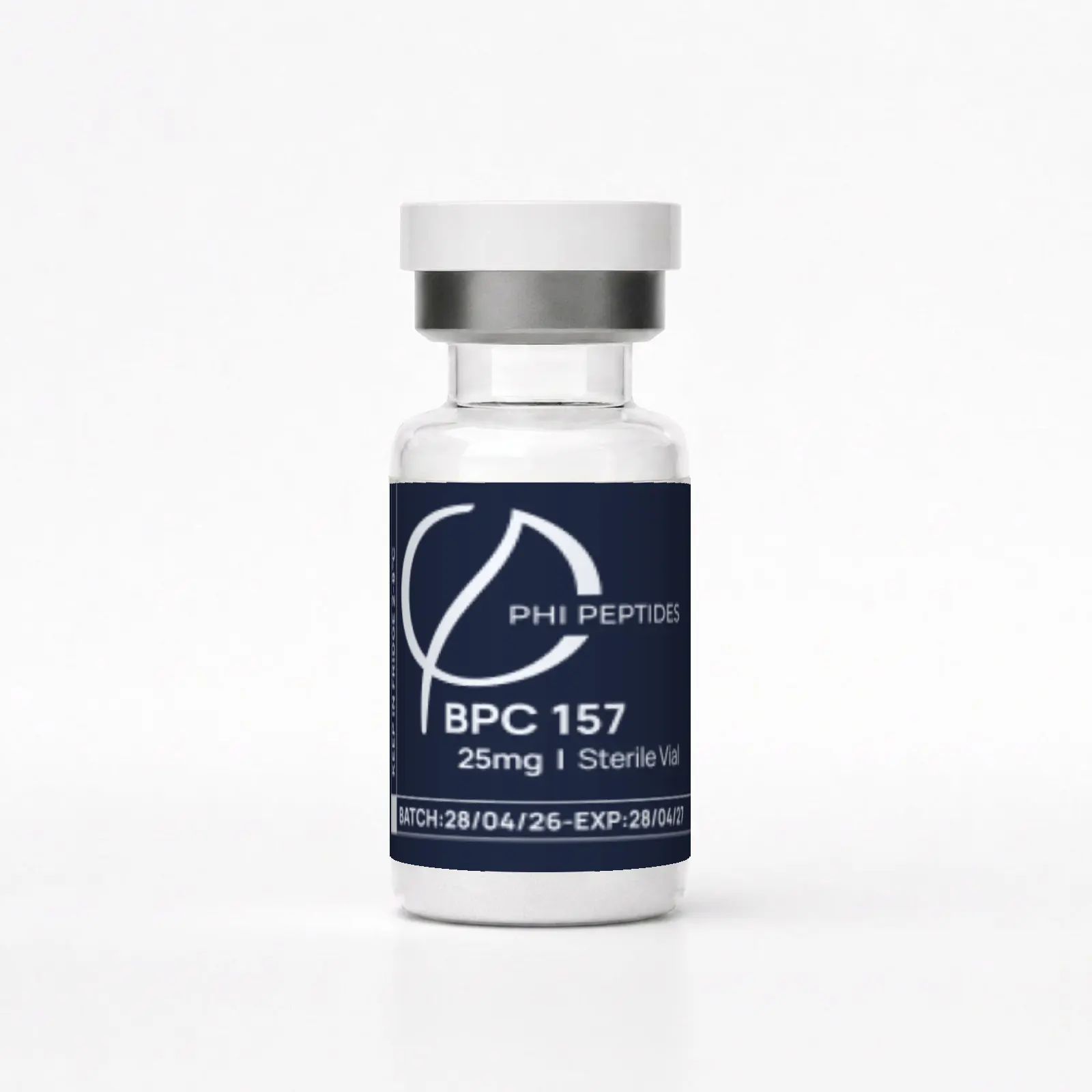
A synthetic pentadecapeptide derived from a protein found in gastric juice, studied extensively in preclinical models of soft-tissue and gastrointestinal repair.
| Standard Delivery (Signed for) | Delivered within 3-5 working days |
| Express Delivery (Standard Parcels) | Delivered within 1-2 working days |
| Extra-Large Parcels (Signed for) | Delivered within 3-5 working days |
| Furniture | Delivery usually takes place within 2 weeks. |
Allow sealed vials to equilibrate to ambient laboratory temperature before opening. This helps minimise the risk of condensation forming within the vial. Keep unopened vials stored at 2-8 C, protected from direct light and moisture. All handling, storage after opening, and laboratory procedures should be carried out according to the receiving laboratory’s established protocols and applicable requirements.
BPC-157 is a stable synthetic sequence of fifteen amino acids derived from a protective protein identified in human gastric juice. It is among the most widely investigated compounds in the regenerative peptide field, with a large preclinical literature covering tendon and ligament injury, muscle transection, gastrointestinal mucosal damage, and peripheral nerve injury. The consistent theme across these models is accelerated angiogenesis and organised tissue remodelling rather than a single receptor-mediated action. It is important to be clear that this body of work is almost entirely animal-based; controlled human trials have not been published. PHI supplies BPC-157 for use within a supervised clinical setting, and practitioners should frame it to patients as a compound with a strong and reproducible preclinical signal awaiting human confirmation.
Active Compound: BPC-157 (Body Protection Compound-157)
Permitted Claim GuidelinesWidely studied in preclinical models of tissue repair. Used under practitioner supervision. Human clinical evidence is not yet available.
Appears to act primarily by upregulating vascular endothelial growth factor receptor 2 (VEGFR2) signalling and the downstream nitric oxide pathway, promoting angiogenesis at the site of injury. Additional preclinical observations include modulation of growth hormone receptor expression in tendon fibroblasts, stabilisation of the gut-brain axis, and influence on dopaminergic and serotonergic systems.
Evidence Grade: D - Preclinical evidence only; no controlled human trials
Clinical Evidence BaseExtensive rodent evidence across tendon, ligament, muscle, bone, gastrointestinal and nerve injury models, produced largely by a small number of research groups. No published randomised controlled human trials. Clinical use is therefore experience-based rather than trial-based.
Literature & ReferencesSikiric P et al. Curr Pharm Des, 2011 - BPC 157 and gastrointestinal cytoprotection. | Chang CH et al. J Appl Physiol, 2011 - effect on tendon fibroblast outgrowth and FAK-paxillin signalling. | Seiwerth S et al. Curr Med Chem, 2014 - BPC 157 and blood vessel recruitment. | Hsieh MJ et al. J Mol Med, 2017 - VEGFR2 activation and angiogenesis.
No dose-limiting toxicity has been identified in animal studies and clinical experience reports good tolerability, but the absence of human safety trials means long-term risk is genuinely unknown. Theoretical concern exists regarding angiogenic activity in the presence of occult malignancy. Not for use in pregnancy or breastfeeding. Injection-site reactions are the most common reported effect.
ContraindicationsActive or suspected malignancy; pregnancy and breastfeeding; known hypersensitivity. Caution with concurrent anticoagulation.
Storage & HandlingStore lyophilised vial at 2-8 C, protected from light. Reconstituted product refrigerated at 2-8 C.
Not authorised as a medicine in the UK, EU or US. Added to the WADA Prohibited List (S0) from 2022. Supplied only through appropriate professional, prescription-led and jurisdictionally compliant channels.