
Currently Empty: $0.00
Research only

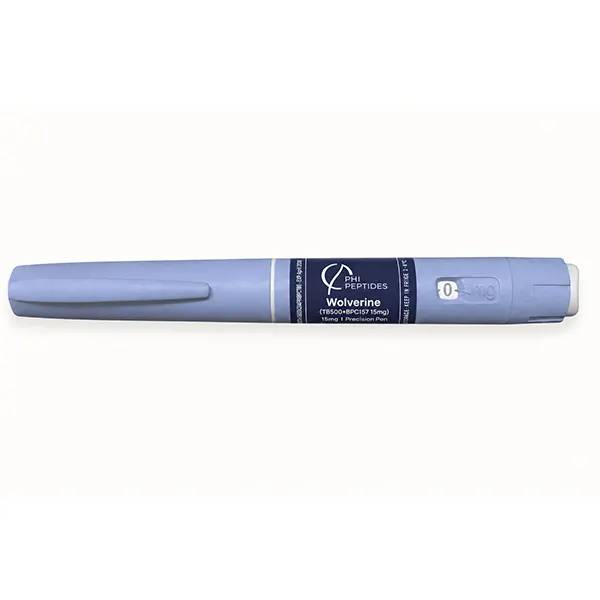
A fixed combination of the two most widely used regenerative peptides, pairing an angiogenic and a cell-migration mechanism.
| Standard Delivery (Signed for) | Delivered within 3-5 working days |
| Express Delivery (Standard Parcels) | Delivered within 1-2 working days |
| Extra-Large Parcels (Signed for) | Delivered within 3-5 working days |
| Furniture | Delivery usually takes place within 2 weeks. |
Allow sealed vials to equilibrate to ambient laboratory temperature before opening. This helps minimise the risk of condensation forming within the vial. Keep unopened vials stored at 2-8 C, protected from direct light and moisture. All handling, storage after opening, and laboratory procedures should be carried out according to the receiving laboratory’s established protocols and applicable requirements.
This combination pairs BPC-157 with TB-500, the two compounds most commonly used together in regenerative peptide practice. The mechanistic rationale is complementary rather than overlapping: BPC-157 is associated with angiogenesis and vascular recruitment at the site of injury, while thymosin beta-4 fragments act on actin dynamics and cell migration. Delivering both in a single presentation reduces the number of administrations and simplifies protocols, which is its principal practical argument. It should be stated plainly that no study has evaluated the combination, in humans or in animals, and no synergy has been demonstrated – the pairing rests on mechanism and clinical experience. Practitioners choosing a fixed combination should be satisfied that both components are individually indicated, since the ratio is not adjustable.
Active Compound: TB-500 + BPC-157 (combination)
Permitted Claim GuidelinesA combination of two widely studied regenerative peptides. Used under practitioner supervision. The combination has not been evaluated in published research.
Dual mechanism. BPC-157 upregulates VEGFR2 signalling and nitric oxide pathways, promoting angiogenesis and organised granulation tissue. TB-500 sequesters G-actin and regulates actin polymerisation, promoting migration of endothelial cells, keratinocytes and stem cells into injured tissue and limiting fibrotic remodelling.
Evidence Grade: D - Combination unstudied; both components preclinical only
Clinical Evidence BaseComponent-level preclinical evidence only. No study of the combination has been published in humans or animals, and no synergistic effect has been demonstrated. Human evidence for either component in the supplied form is absent.
Literature & ReferencesRefer to component literature for BPC-157 and TB-500. No combination-specific literature exists. | Sikiric P et al. Curr Pharm Des, 2011. | Goldstein AL et al. Trends Mol Med, 2005.
Carries the combined precautions of both components. The shared theoretical concern is angiogenic and cell-migration activity in the presence of occult malignancy, which is unresolved for both. Not for use in pregnancy or breastfeeding. Injection-site reactions are the most commonly reported effect. Human safety data are absent for both components.
ContraindicationsActive or suspected malignancy; pregnancy and breastfeeding; known hypersensitivity. Caution with concurrent anticoagulation.
Storage & HandlingStore lyophilised vial or cartridge at 2-8 C, protected from light.
Neither component is authorised as a medicine in the UK, EU or US. Both are prohibited in sport under the WADA Prohibited List. Supplied only through appropriate professional, prescription-led channels.