
Currently Empty: $0.00
Research only

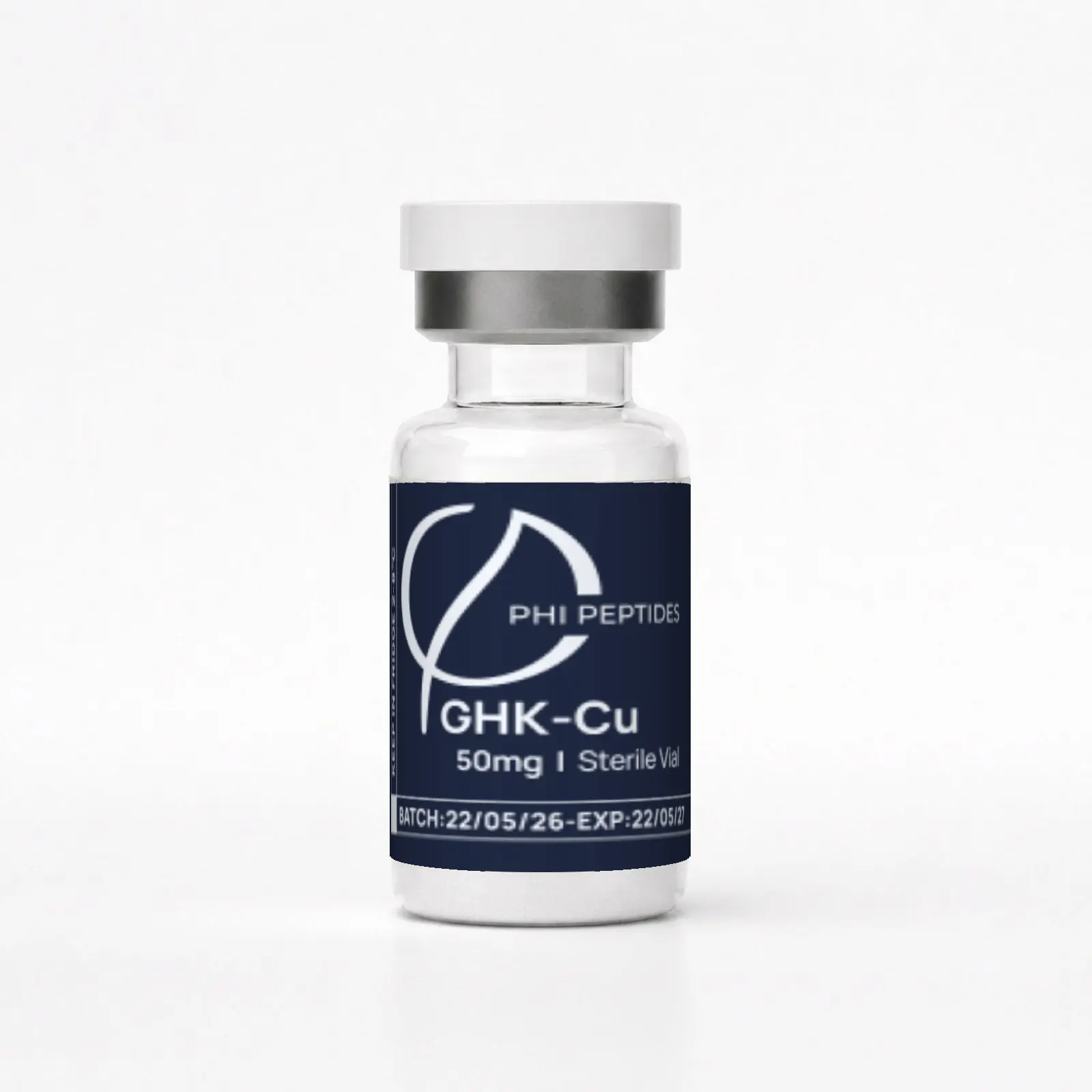
A naturally occurring copper-binding tripeptide present in human plasma, with the strongest dermatological evidence base of the regenerative peptide group.
| Standard Delivery (Signed for) | Delivered within 3-5 working days |
| Express Delivery (Standard Parcels) | Delivered within 1-2 working days |
| Extra-Large Parcels (Signed for) | Delivered within 3-5 working days |
| Furniture | Delivery usually takes place within 2 weeks. |
Allow sealed vials to equilibrate to ambient laboratory temperature before opening. This helps minimise the risk of condensation forming within the vial. Keep unopened vials stored at 2-8 C, protected from direct light and moisture. All handling, storage after opening, and laboratory procedures should be carried out according to the receiving laboratory’s established protocols and applicable requirements.
GHK is a tripeptide found naturally in human plasma, saliva and urine, where plasma concentrations decline substantially with age. Bound to copper, it functions as a physiological copper carrier and a signal in tissue remodelling. It is unusual within this category in having a genuine controlled human evidence base, predominantly from topical dermatological application, where studies have reported improvements in skin density, fine lines and photodamage. Broader gene-expression profiling work has reported effects across a wide range of regenerative and antioxidant pathways. It should be noted that the strong human evidence relates to topical use; the injectable route is less well characterised, and the copper content makes dosing a genuine clinical consideration rather than a formality. PHI supplies GHK-Cu for practitioner-directed use.
Active Compound: GHK-Cu (copper tripeptide-1, Gly-His-Lys : Cu2+)
Permitted Claim GuidelinesA naturally occurring copper-binding peptide with published human data in topical dermatological use. Injectable use is under practitioner supervision.
Acts as a copper(II) carrier with high affinity, delivering copper to cells and modulating expression of genes governing collagen, elastin, proteoglycan and glycosaminoglycan synthesis. Influences the balance of matrix metalloproteinases and their tissue inhibitors, supporting organised remodelling rather than fibrosis. Also reported to have antioxidant and anti-inflammatory gene-expression effects.
Evidence Grade: B (topical) / C (injectable) - Controlled human data for topical route; injectable route less characterised
Clinical Evidence BaseControlled human trials of topical GHK-Cu report measurable improvements in skin parameters. Extensive in vitro and gene-expression data. Injectable systemic use is supported by mechanism and clinical experience rather than by controlled trials, and the evidence should not be transferred between routes without qualification.
Literature & ReferencesPickart L, Margolina A. Int J Mol Sci, 2018 - regenerative and protective actions of the GHK-Cu peptide. | Pickart L, Vasquez-Soltero JM, Margolina A. Oxid Med Cell Longev, 2012 - GHK and DNA gene expression. | Finkley MB et al. Int J Cosmet Sci, 2005 - copper peptide facial cream in photoaged skin. | Leyden J et al. J Am Acad Dermatol, 2002 - skin care benefits of copper peptide containing cream.
Copper load is the principal safety consideration. Absolutely contraindicated in Wilson's disease and used with caution in hepatic impairment or any disorder of copper handling. Excess systemic copper can cause nausea, gastrointestinal upset and, at sustained high exposure, hepatic effects. Local skin discolouration at the injection site has been reported. Not for use in pregnancy or breastfeeding. Where higher-strength presentations are used, periodic assessment of copper and caeruloplasmin is prudent.
ContraindicationsWilson's disease or other copper metabolism disorders; hepatic impairment; pregnancy and breastfeeding; known hypersensitivity to copper.
Storage & HandlingStore lyophilised vial at 2-8 C, protected from light. Copper peptides are light-sensitive; retain in outer carton.
Approved as a cosmetic ingredient for topical use in most markets. Not authorised as an injectable medicine in the UK, EU or US. Supplied only through appropriate professional channels.