
Currently Empty: $0.00
Research only

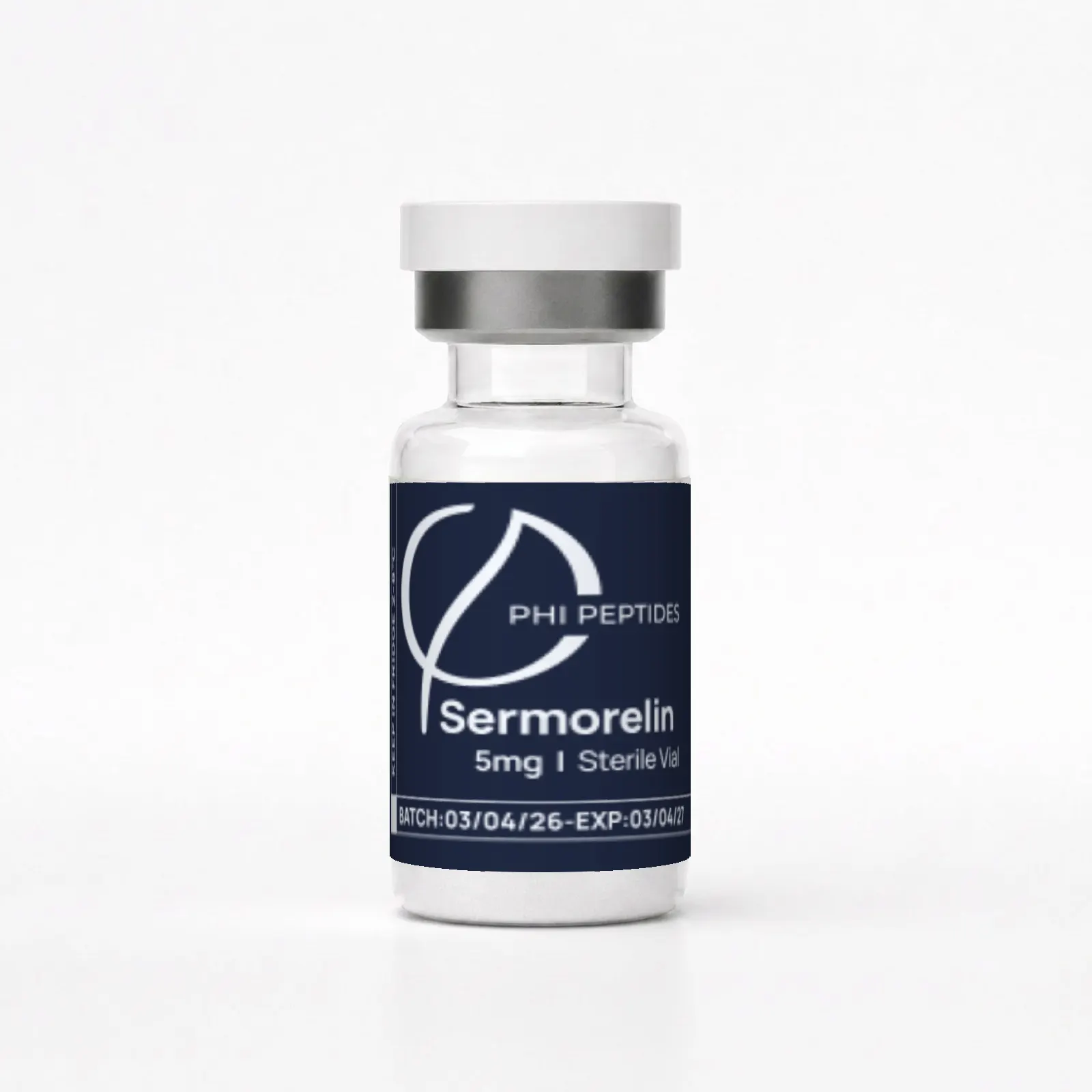
The shortest fully active fragment of growth hormone releasing hormone, previously licensed as a diagnostic and paediatric therapeutic agent.
| Standard Delivery (Signed for) | Delivered within 3-5 working days |
| Express Delivery (Standard Parcels) | Delivered within 1-2 working days |
| Extra-Large Parcels (Signed for) | Delivered within 3-5 working days |
| Furniture | Delivery usually takes place within 2 weeks. |
Allow sealed vials to equilibrate to ambient laboratory temperature before opening. This helps minimise the risk of condensation forming within the vial. Keep unopened vials stored at 2-8 C, protected from direct light and moisture. All handling, storage after opening, and laboratory procedures should be carried out according to the receiving laboratory’s established protocols and applicable requirements.
Sermorelin is the synthetic 1-29 amino acid sequence of human growth hormone releasing hormone, the shortest fragment retaining full biological activity. It has a genuine regulatory history: it was previously approved in the United States as Geref for the diagnosis and treatment of growth hormone deficiency in children, and was withdrawn from the market for commercial rather than safety reasons. That history gives it a better-characterised human safety profile than most compounds in this portfolio. Its physiological argument is that, by acting on the pituitary, it preserves the natural pulsatile pattern of growth hormone release and remains subject to negative feedback, in contrast to exogenous growth hormone. Its short half-life is the practical trade-off. Use for adult body composition, recovery or ageing purposes is off-label and not supported by controlled trials.
Active Compound: Sermorelin (GHRH 1-29)
Permitted Claim GuidelinesA GHRH fragment previously licensed for the diagnosis and treatment of growth hormone deficiency. Used under practitioner supervision with appropriate endocrine monitoring.
Binds the GHRH receptor on anterior pituitary somatotrophs, stimulating synthesis and pulsatile release of growth hormone, with consequent hepatic IGF-1 production. Because the pituitary remains the effector, physiological negative feedback via somatostatin and IGF-1 is preserved, which limits supraphysiological elevation.
Evidence Grade: A (former licensed paediatric indication) / C (off-label adult use, no controlled trials)
Clinical Evidence BaseFormal clinical development and prior FDA approval for paediatric growth hormone deficiency, providing established human safety and pharmacodynamic data. Adult use for body composition, sleep or ageing endpoints has not been established in controlled trials and is off-label.
Literature & ReferencesPrakash A, Goa KL. BioDrugs, 1999 - sermorelin, a review of its use in growth hormone deficiency. | Walker RF. Clin Interv Aging, 2006 - sermorelin, a better approach to management of adult-onset GH insufficiency. | Corpas E et al. J Clin Endocrinol Metab, 1992 - GHRH 1-29 twice daily reverses the decreased GH and IGF-1 of old men.
Well characterised from its licensed period. The most common effect is injection-site reaction; flushing, headache, dizziness and transient taste disturbance have been reported. Because it works through the pituitary with intact feedback, the risk of supraphysiological growth hormone exposure is lower than with exogenous GH, but not absent. Contraindicated where malignancy is present or suspected. Concurrent glucocorticoid therapy, hypothyroidism and obesity all blunt the response. IGF-1 monitoring is advised.
ContraindicationsActive or suspected malignancy; pregnancy and breastfeeding; untreated hypothyroidism (blunts response); acute critical illness; known hypersensitivity.
Storage & HandlingStore lyophilised vial at 2-8 C, protected from light.
Previously approved in the United States (Geref); withdrawn for commercial reasons and no longer marketed. Not currently authorised in the UK or EU. Prohibited in sport under the WADA Prohibited List (S2). Supplied only through appropriate professional, prescription-led channels.