
Currently Empty: $0.00
Research only

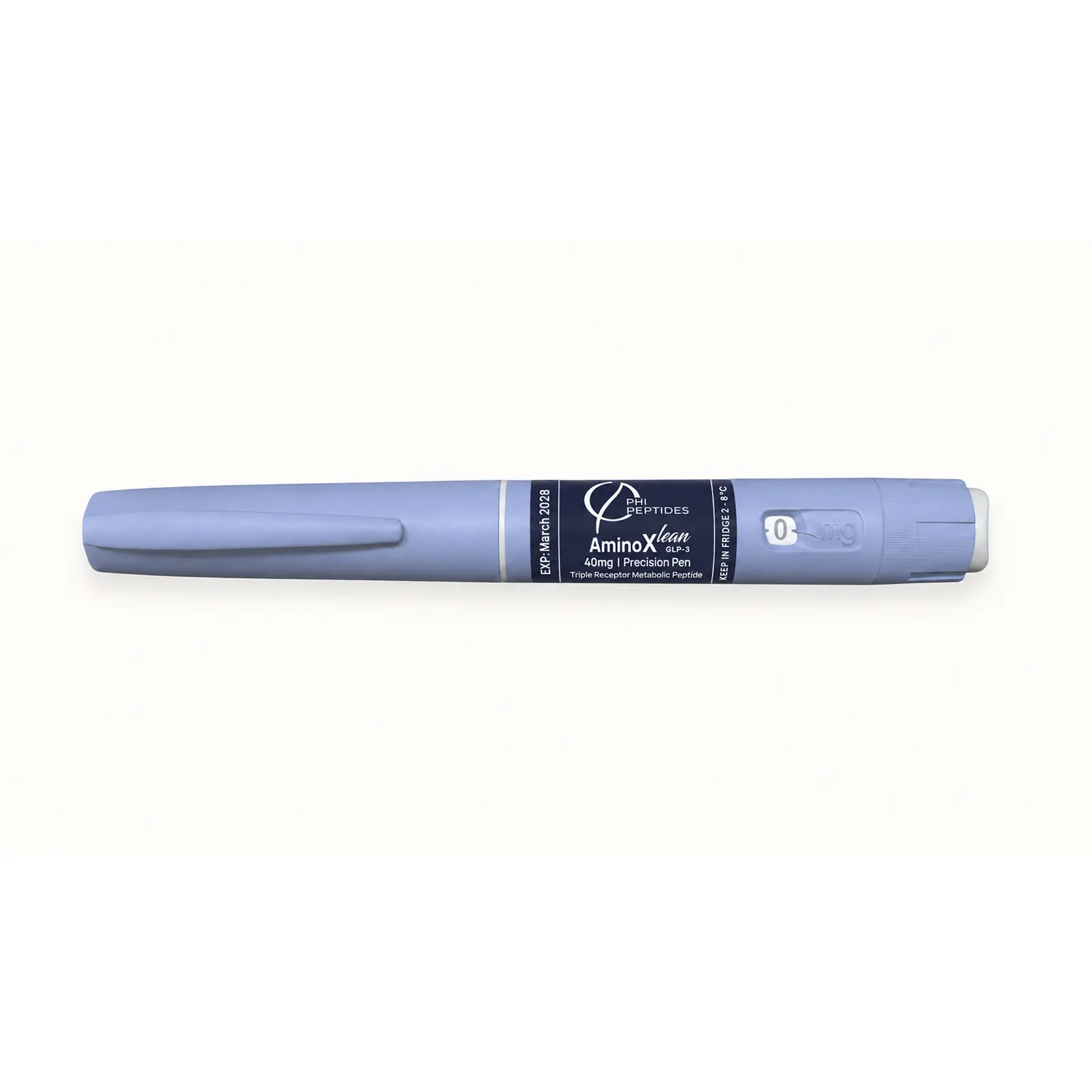
An investigational triple receptor agonist in late-stage clinical development, producing the largest weight reductions reported for any pharmacological agent to date.
| Standard Delivery (Signed for) | Delivered within 3-5 working days |
| Express Delivery (Standard Parcels) | Delivered within 1-2 working days |
| Extra-Large Parcels (Signed for) | Delivered within 3-5 working days |
| Furniture | Delivery usually takes place within 2 weeks. |
Allow sealed vials to equilibrate to ambient laboratory temperature before opening. This helps minimise the risk of condensation forming within the vial. Keep unopened vials stored at 2-8 C, protected from direct light and moisture. All handling, storage after opening, and laboratory procedures should be carried out according to the receiving laboratory’s established protocols and applicable requirements.
Retatrutide is a single-molecule agonist at three receptors – GIP, GLP-1 and glucagon – and represents the most advanced iteration of the incretin class. Its Phase II obesity results, published in 2023, reported mean weight reductions substantially exceeding those of dual agonists, and it is currently in Phase III. It is essential to be clear about its status: retatrutide is an investigational medicine that has not been approved by any regulator, its long-term safety profile is not established, and the compound remains under active development by its originator. Material supplied outside that development programme is not the investigational medicinal product used in those trials, and the trial results cannot be attributed to it. This SKU carries significant regulatory and intellectual property exposure and should not be listed without legal review.
Active Compound: Retatrutide (GGG tri-agonist: GIP / GLP-1 / glucagon receptor)
Permitted Claim GuidelinesAn investigational triple receptor agonist currently in clinical development. Not an approved medicine. Supplied only on documented practitioner direction where permitted.
Simultaneous agonism at the glucose-dependent insulinotropic polypeptide, glucagon-like peptide-1 and glucagon receptors. GLP-1 and GIP activity reduce appetite, slow gastric emptying and enhance glucose-dependent insulin secretion; glucagon receptor agonism additionally increases energy expenditure and promotes hepatic fat mobilisation. The glucagon component distinguishes it from dual agonists.
Evidence Grade: B - Phase II data published, Phase III ongoing; investigational, not approved
Clinical Evidence BasePhase II randomised placebo-controlled trials in obesity and type 2 diabetes reported substantial, dose-dependent weight reduction and glycaemic improvement. Phase III programmes are ongoing. No regulatory approval anywhere; long-term safety and cardiovascular outcome data are not yet available.
Literature & ReferencesJastreboff AM et al. N Engl J Med, 2023 - triple-hormone-receptor agonist retatrutide for obesity, Phase 2 trial. | Rosenstock J et al. Lancet, 2023 - retatrutide in patients with type 2 diabetes, Phase 2 trial. | Coskun T et al. Cell Metab, 2022 - LY3437943, a novel GIP, GLP-1 and glucagon receptor tri-agonist.
Class effects are gastrointestinal and dose-related: nausea, vomiting, diarrhoea and constipation, most pronounced during dose escalation. Reported class risks include pancreatitis, gallbladder disease and cholelithiasis with rapid weight loss, and dehydration with consequent renal impairment. Rodent studies of the GLP-1 class show thyroid C-cell tumours; the class is contraindicated with personal or family history of medullary thyroid carcinoma or MEN2. Increased heart rate has been observed. Contraindicated in pregnancy. Loss of lean mass alongside fat mass requires attention to protein intake and resistance training.
ContraindicationsPersonal or family history of medullary thyroid carcinoma; multiple endocrine neoplasia type 2; history of pancreatitis; pregnancy and breastfeeding; severe gastrointestinal disease including gastroparesis; known hypersensitivity. Caution with insulin or sulfonylureas due to hypoglycaemia risk.
Storage & HandlingStore lyophilised vial or cartridge at 2-8 C, protected from light. Do not freeze.
Investigational medicinal product under active development. Not approved by any regulator. Supply outside a clinical trial raises significant regulatory, product liability and intellectual property considerations that require legal review before any listing.